Histoire de la Maison
In 2026, Maison Jacques Fath will introduce a new creative direction.
VÊTEMENTS AVEC INTELLIGENCE ÉTERNELLE
On 11 May 2026, the maison de couture resumed operations at 217 rue Saint-Honoré in Paris.
The presentation of the renewed fashion house is scheduled to take place on 6 September 2026.
September SIX
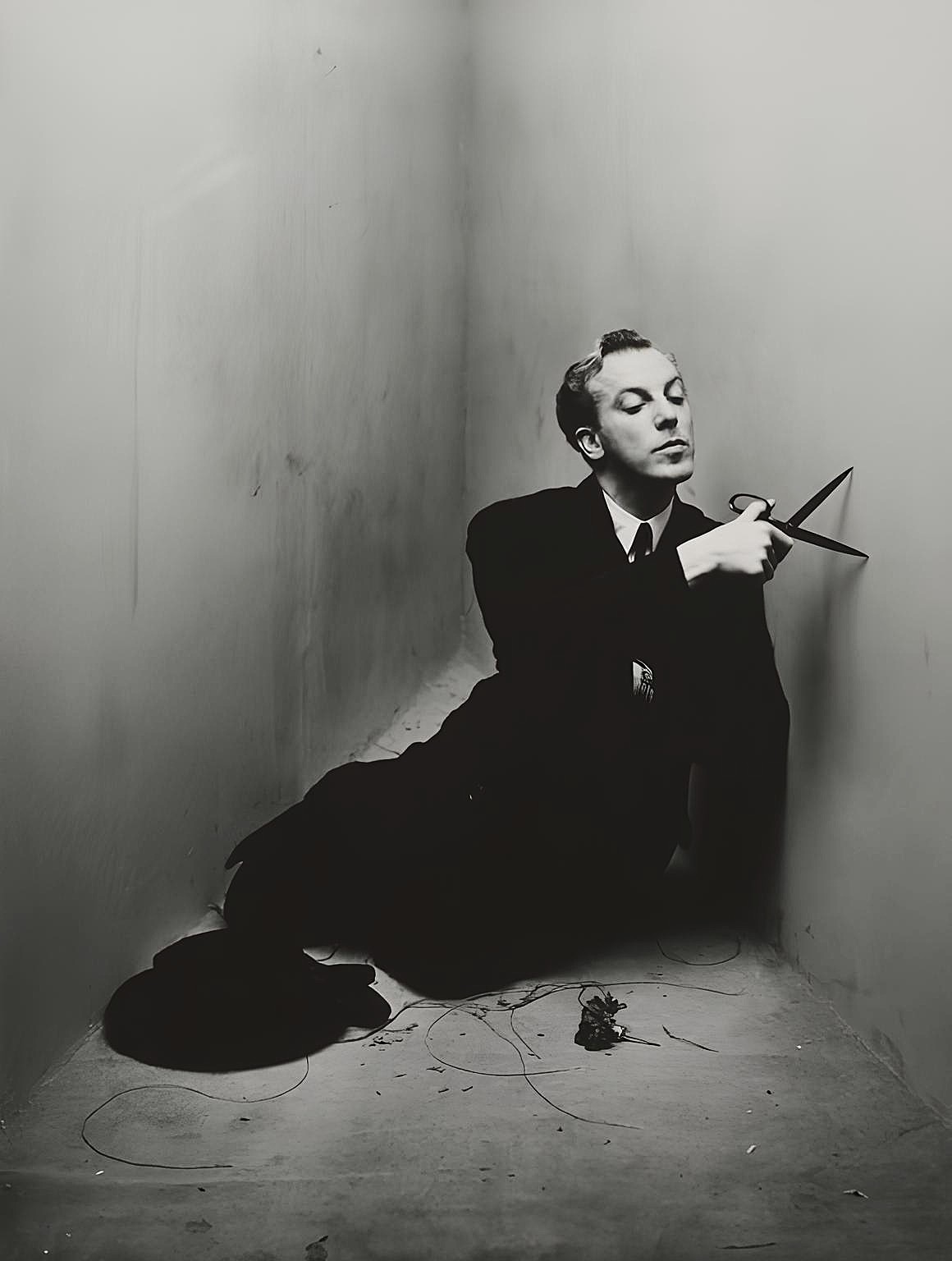
Jacques Fath — Paris, 1948
The Alchemy of Rebellion That Became Eternity
There are names in history that are not merely inscribed in chronicles, but burned into them with a special font — bold, soaring, unmistakably recognizable. Such was the name of Jacques Fath.
He was not a couturier in the conventional sense, but a visionary whose rebellion anticipated an entire era.
Revolution
A New Era of Sensuality, Movement, and Theatre
Even before Christian Dior, Cristóbal Balenciaga, and Pierre Balmain proclaimed their manifestos, Fath was already single-handedly shaking the foundations, viewing woman not as a mannequin for displaying fabric, but as the protagonist of a grand spectacle called 'life'.
His dresses did not merely clothe the form — they released energy.
In an era when fashion still ceremoniously bowed to the primness of the past, Fath burst in with the whistle of cutting silk, proclaiming a new era — an era of sensuality, movement, and theatre.
He laid the foundations for the future Fashion Week, opening his House in 1937.
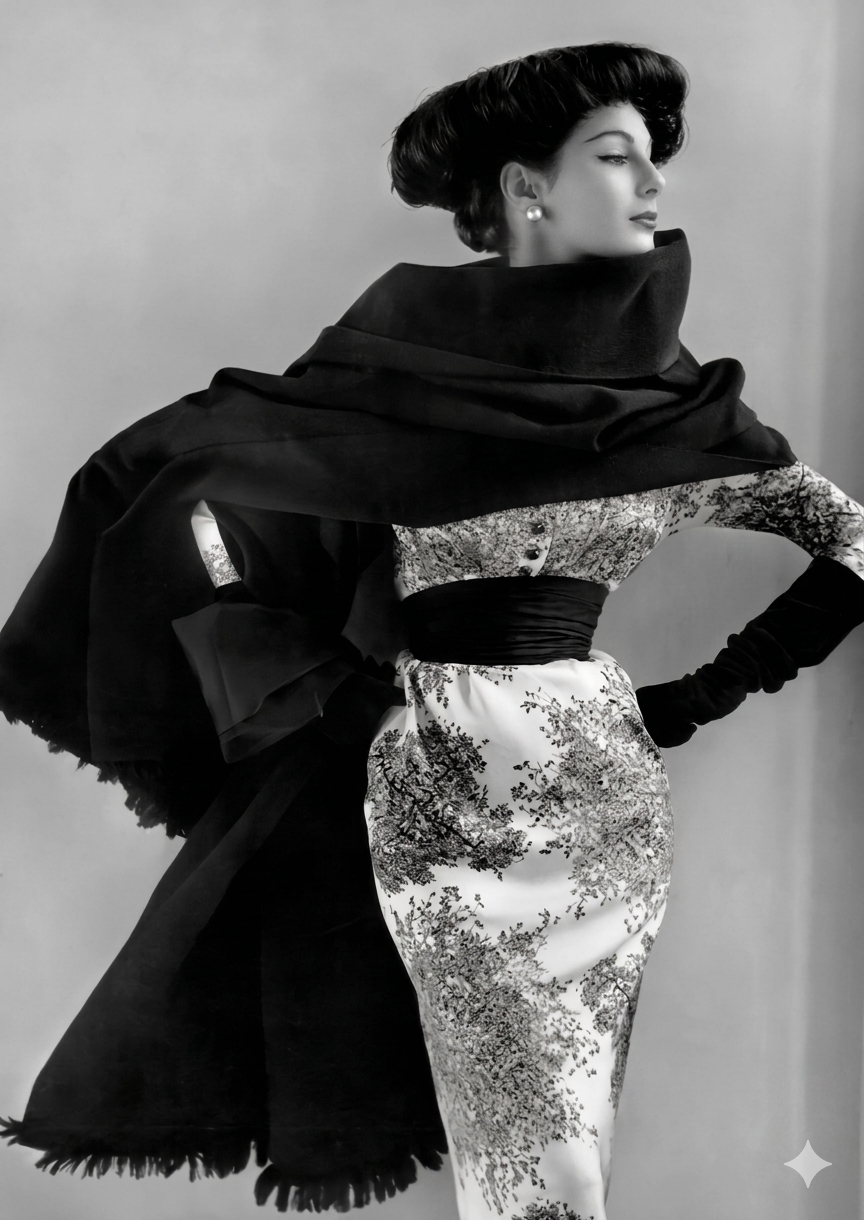
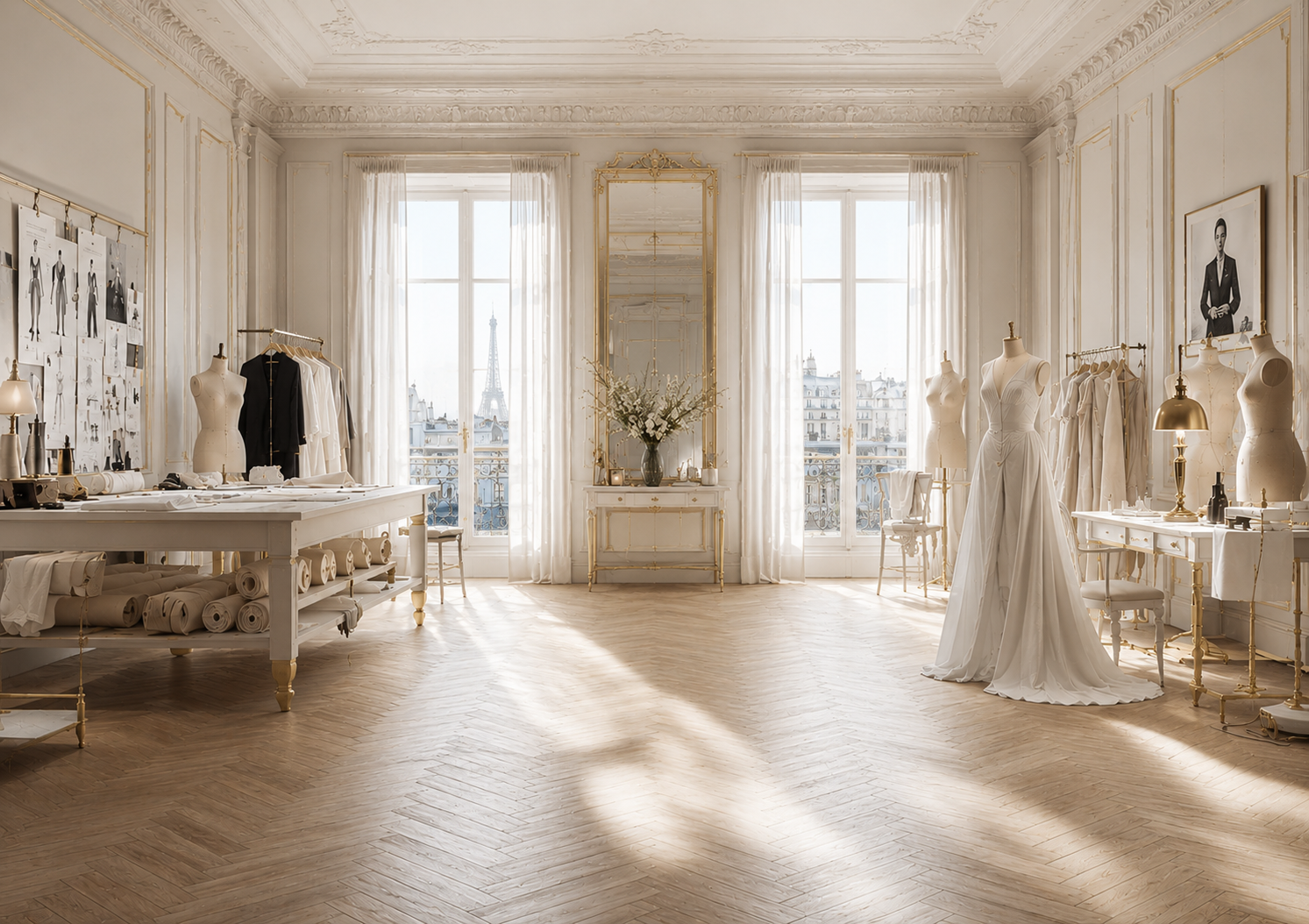
Maison Jacques Fath — Atelier
'A woman in such a dress could not be static — she was a whirlwind, frozen for a moment'
Paris
At the Crossroads of Eras
Imagine Paris at the crossroads of eras. The slow 19th century was departing, and the world, not yet recovered from one war, was already subconsciously sensing the approach of another. It was in this anxious, electric atmosphere that Fath's talent flourished.
While Dior was accumulating ideas for his 'New Look' and Balenciaga contemplated the architecture of cut, Fath was already embodying his triad: sensuality, provocation, chic.
He was self-taught, and therein lay his strength — he was not constrained by academic canons; he was nourished by theatrical stages, feminine silhouettes on the streets, and his own unerring instinct.
Philosophy
The Spindle — A Philosophical Statement
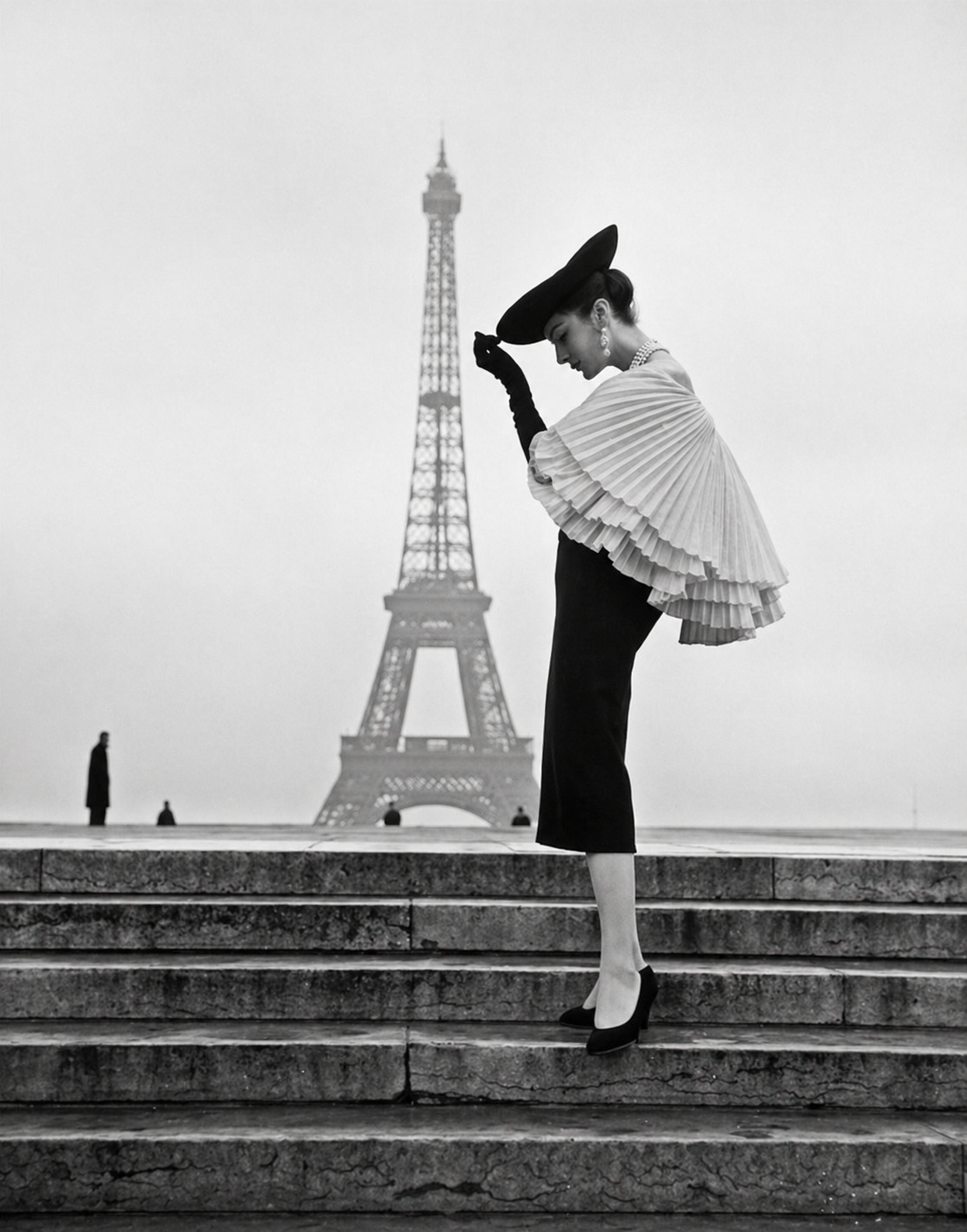
He created not clothes, but an extension of personality. His famous 'spindle' of the early 1950s was not just a silhouette — it was a philosophical statement.
A fitted bodice, a waist chiseled like an engraving, from which the skirt expanded not with heavy layers of fabric, but with light, inserted gores. They came to life with a gentle breeze, creating the illusion of eternal, spiral rotation.
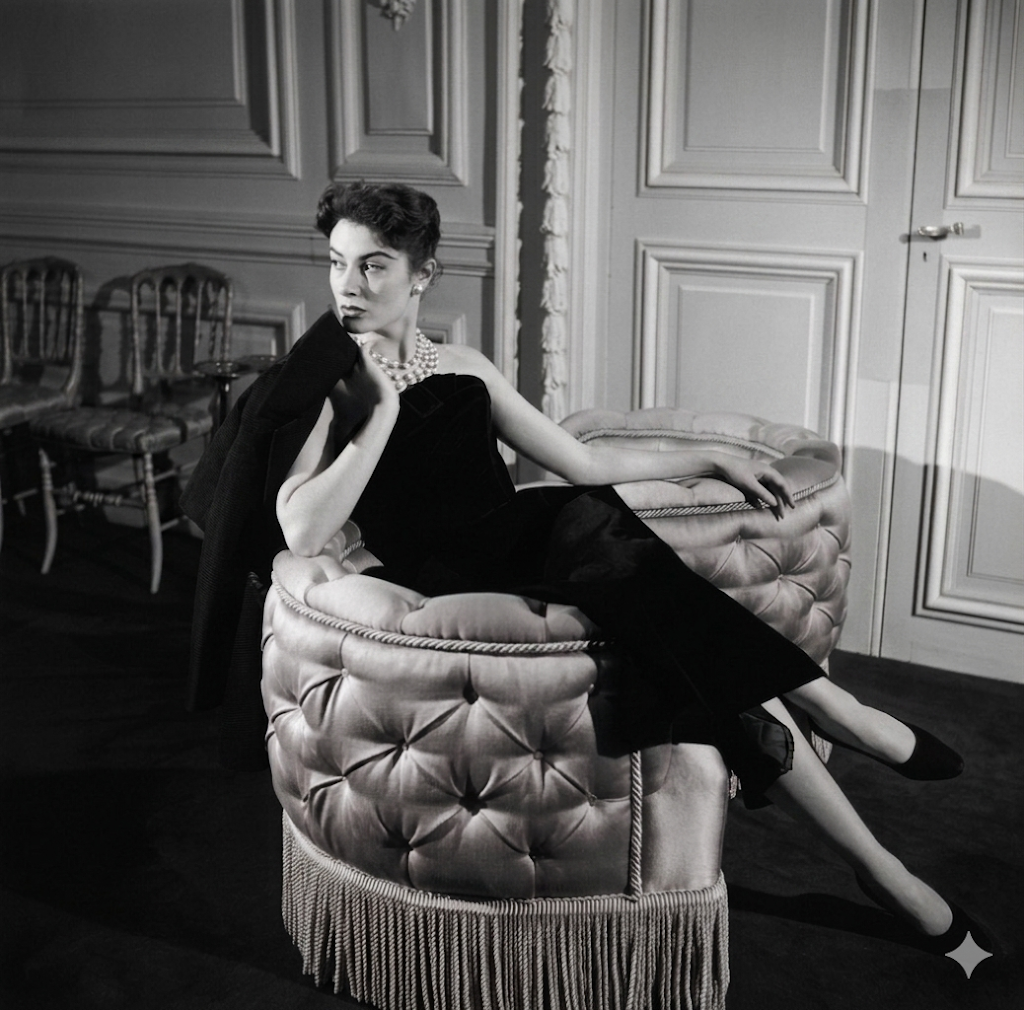
Portrait de la Femme Fath
Muse
Geneviève — The Living Embodiment of a Manifesto
But every revolution must have a living embodiment of its manifesto. For Fath, this embodiment, his Galatea and Pygmalion in one, was Geneviève.
The fateful meeting occurred at acting classes: 19-year-old aristocrat Geneviève Boucher de La Bruyère, who had previously worked as a model and secretary for Chanel herself, met the fashion rebel who saw in her a ready-made ideal.
In 1939, she became Madame Fath and something immeasurably greater — his muse, strategist, and face of the House.
Trial
Genius in the War Years
And then came the most severe trial — war. Paris was occupied. Fabrics were rationed, luxury was forbidden, the future was uncertain.
His genius, like a true avant-gardist, saw in limitations a new challenge. He found silk for glamorous evening gowns in decommissioned army parachutes.
It was then, amid fuel shortages, that he invented his famous wide skirts so women could comfortably ride bicycles — a brilliant adaptation of luxury to harsh reality.
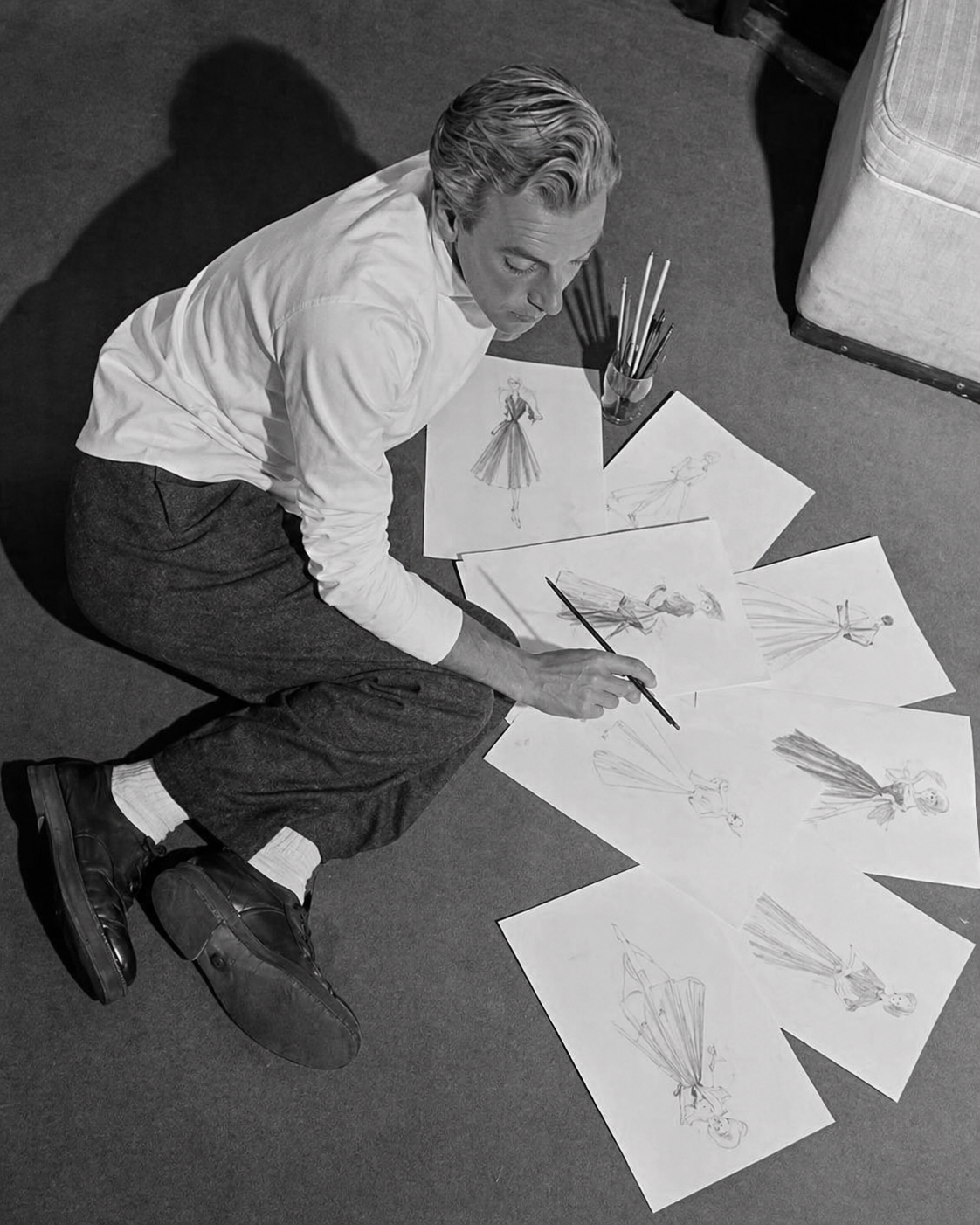
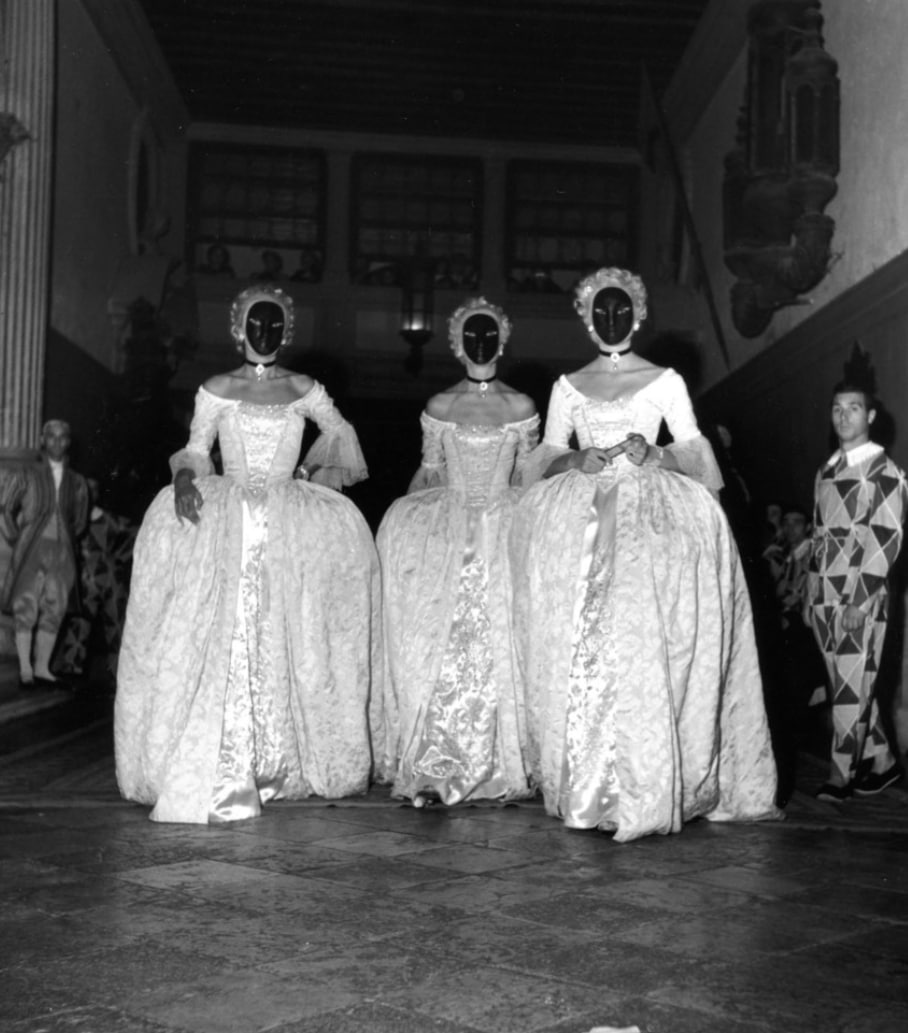
Bal des Rois — Venice, 1951
Performance
Fashion as Total Theatre
He also reinvented the very format of the fashion show. For Fath, a collection presentation was not a succession of models on a runway. It was total theatre.
His costume ball on June 15, 1951, at Château de Corbeville, dedicated to the 15th century era, became legendary: guests in luxurious historical costumes, sets, specially composed music.
He sold not dresses, but emotions, a ticket to illusion, a dream. Today, when any presentation is a multi-million dollar show, it is worth remembering who turned fashion into performance.
1954
A Legacy Scattered Across the World
He departed early, on November 13, 1954, at the age of 42, remaining in memory as the brightest and most fleeting star.
His assistants and helpers — Hubert de Givenchy, Guy Laroche, Valentino — scattered particles of his DNA across the world of haute couture.
But an echo, even the most beautiful one, is not the original. Ideas filtered through other temperaments and eras lost that very Fathesque, uncompromising audacity.
Today
Return to the Source
That is why today we speak not of revival, but of return to the source. Not of resurrecting silhouettes, but of the very philosophy of impeccability.
MAISON JACQUES FATH today is a conscious rejection of all that is superficial, a focus on essence. At its foundation are Fath's authentic concepts, blueprints, and sketches, cleansed of interpretations from subsequent decades.
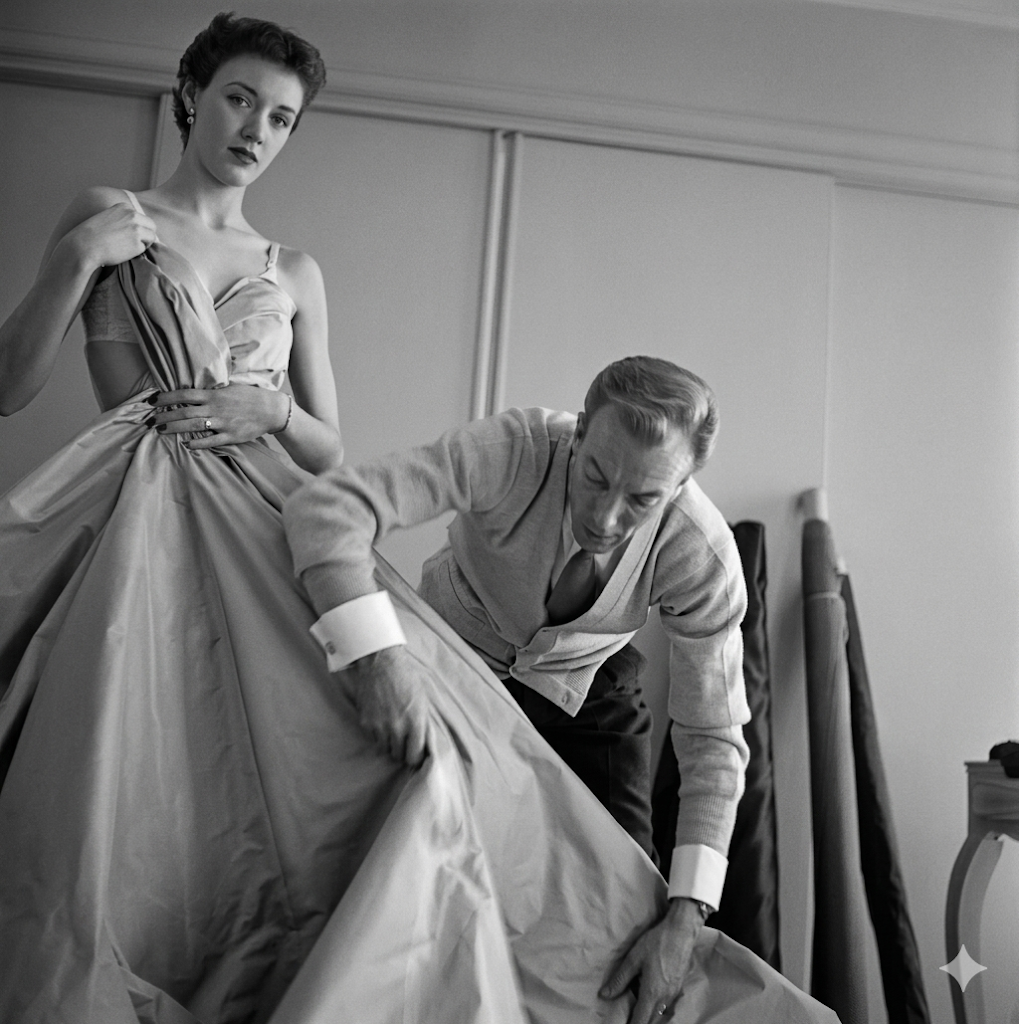
L'Atelier Fath — Paris, 1952
Craftsmanship
The Alchemy of Tradition and Technology
How to embody the spirit of a self-taught genius in the 21st century? How to guarantee that the most complex 'spindle' cut or filigree draping will be reproduced with perfect precision?
The answer lies in the alchemy of tradition and technology.
We entrust precious materials — silk from the Como region, Loro Piana cashmere, Haas lambskin — not merely to hands, but to the world's finest instruments for those hands.
This is not about assembly lines. This is about precision craft.
Value
True Value
In a world where everything is subject to depreciation, we speak of real value. The price of an ethical dress is merely a number, a technical moment of ownership transfer.
True value lies in heritage embodied in material, in impeccable execution, in the right to lifelong possession of history and service.
Genuine art, touched by history, has no season and knows no markdowns. Its value is primordial and immutable.
Boutique